There's the idea that a coffee mix —or blend— It can't be a specialty, but this is a myth. The specialty coffee is not dependent on the unique origin, but on the sensory quality of the grain. For a coffee to be considered a specialty it must reach 80 points or more on the SCA scale, evaluated by a Q Grader. This rule applies both for single-source cafes and for carefully designed mixtures.
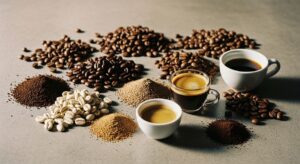
An blend may be of specialty when combining high quality coffeeall defect-free and with mutually compatible profiles. The toasters create these mixtures to highlight specific attributes: higher balance, sweetness, complexity or consistency in cup. If the final mixture maintains the quality standards required by the SCA, it can be classified as a specialty coffee without problem.
Unlike commercial mixtures, which often seek volume or lower costs, the specialty blends are built with intent and precision. This involves rigorous selection, exact proportions and constant tests to ensure that the profile is stable, clean and harmonious. In many high quality cafés, the espresso of the house is precisely a specialty blend designed to function well with or without milk.
In short, yes: a mixing coffee can be of specialty, as long as the grains that make it are of high quality and the final result meets the sensory standards of the industry. Far from limiting, specialty blends open a creative world for toasters and consumers, offering consistent, complex and thought-out cups for a higher experience.
Generated by IA and cured by CIC HofK Coffee